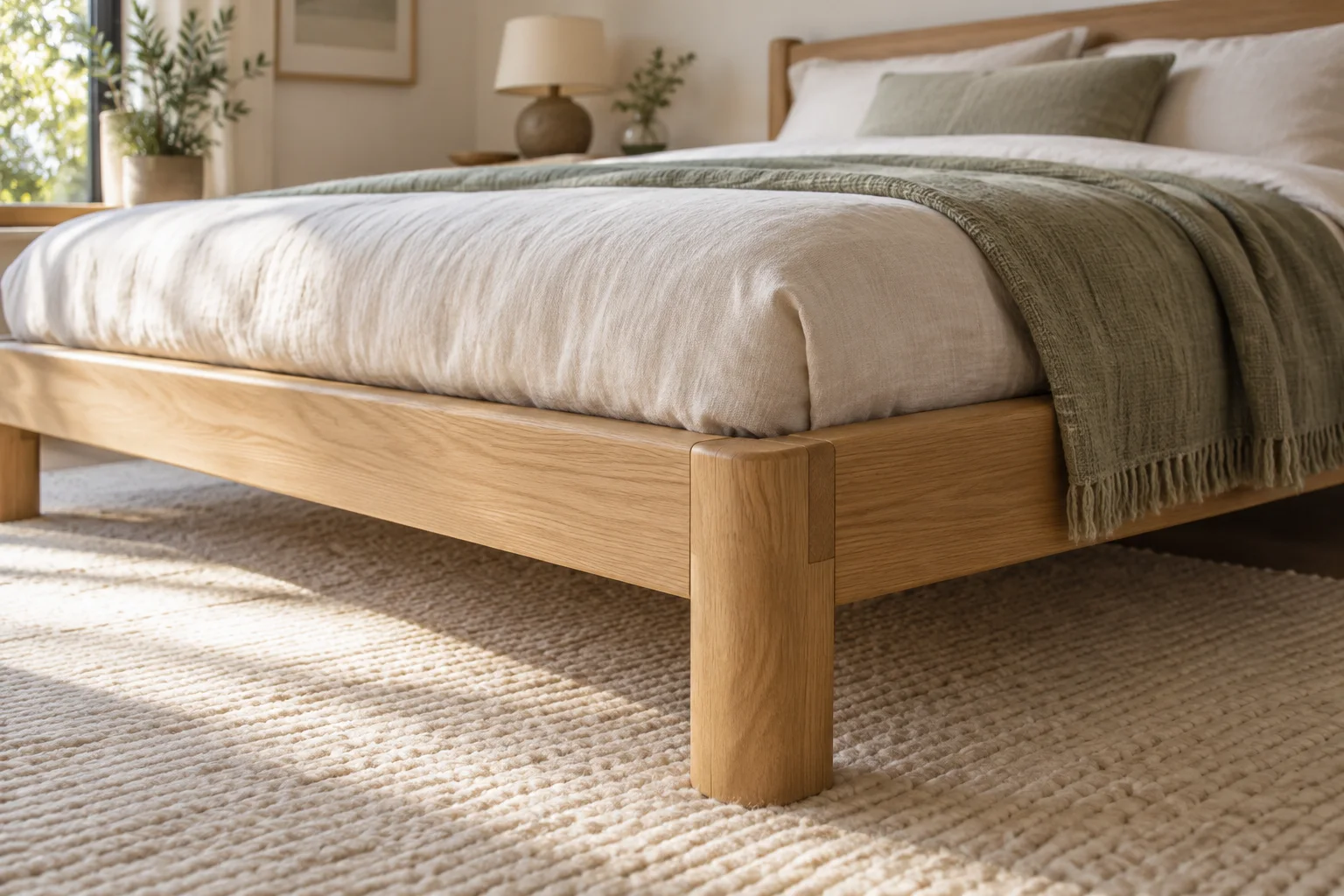
Frame, platform, and foundation are different things
An open metal frame may support a separate foundation rather than a mattress directly. A platform bed may include slats or another support surface. Read the selected product’s construction before deciding whether you need an additional foundation. Our frame catalog makes that distinction explicit.
Slat spacing is a compatibility question
Measure the clear gap between slats and compare it with your mattress manufacturer’s written requirements. Also check slat width, support down the center, and whether center legs need to meet the floor. A platform that is suitable for one mattress is not automatically suitable for every brand or material.
Read load ratings carefully
A quoted weight figure may describe a manufacturer test, a static load, or a stated capacity. It may or may not include the mattress, foundation and bedding. Ask the seller which interpretation applies. We preserve uncertainty rather than presenting every large number as a verified occupant-weight limit.
Bunkie boards and plywood are not universal fixes
A bunkie board can add a support surface, but its own size and support requirements still matter. Before using a solid panel or plywood, check the mattress maker’s ventilation and foundation rules and the bed maker’s load requirements. An extra layer does not establish that an undersupported frame is suitable.
Quiet is something to evaluate
Joinery, slat cushioning, fasteners and floor contact can all affect a frame’s behavior. A retailer’s quiet or noise-free description is a claim, not our test result. Check assembly instructions, return eligibility after assembly, and what the manufacturer recommends if movement or noise develops.
Research notes
Size examples and product distinctions are based on the manufacturers’ published specifications. For an exact product, use its model guide and linked sources.